

Why DSOs Need Both Generator and Load Forecasting to Operate Modern Grids
With the increase of DERs, DSOs have begun the shift from passive infrastructure operators to active system managers, placing greater demand on system controls.



In the dynamic landscape of electricity distribution, Distribution System Operators (DSOs) face increased complexity driven by the increase in electrification, renewables penetration and the rising demand variability. EVs and heat pumps, bi-directional flows from rooftop PVs and distributed energy resources (DERs) are just some examples of the shift. As a result, forecasting of both load and generation (net demand) is now essential for DSOs to ensure network stability, security and efficiency.
Why Load Forecasting Alone is Not Enough
Traditionally, DSOs utilised long-term load forecasting for network planning purposes in order to address the worst-case scenarios. However, with the increase of DERs, DSOs have begun the shift from passive infrastructure operators to active system managers, placing greater demand on system controls. The recurring occurrences of reverse power flows, voltage rises and congestions, which are the result of DER operation, make additional generation forecasting a necessary application in real-time operations. Forecasting both demand and generation provides options and room for optimal adjustments to maintain proper grid operation. For example voltage violations and transformer stress can be anticipated and thus, overloads can be pre-emptively managed minimising curtailment or disconnections.
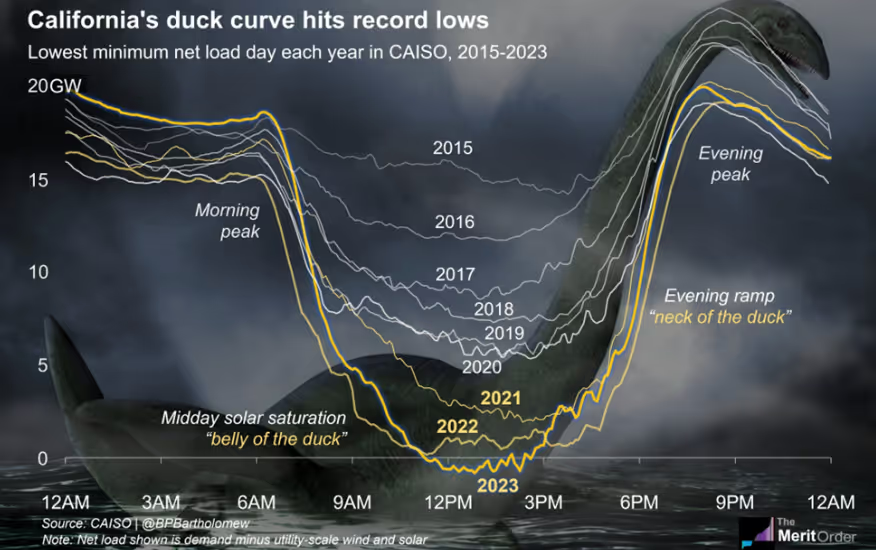
To put all this into an operational perspective, there are two real-world examples which show the necessity of a two-sided forecast. First the so-called “duck curve” which illustrates a steep evening demand ramp after midday solar peaks seen in Image 1. These rapid shifts in grid loading require both generation and demand forecasts in order to be effectively managed.
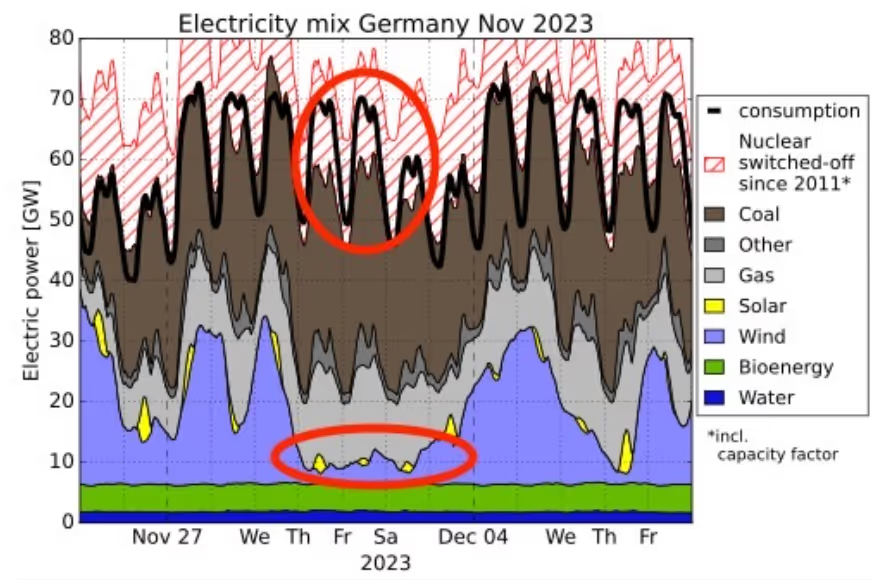
The second example called “dunkelflaute”, seen on Image 2, describes prolonged periods of low sun and wind generation creating a challenge on both the supply adequacy and grid stability fronts. These phenomena highlight extreme situations where DSOs could utilise a generation and demand forecast in order to plan and operate networks that are resilient.
Operational Value of Net Demand Forecasting
There are many gains from the insights of a two-sided forecast. It enables functionalities such as real-time grid control directly enabling congestion management and DER coordination. Decision-making is based on network intelligence, flexibility activates optimally: when, where and how much is needed.
Forecasting & Flexibility Markets
With multiple flexible assets present in the distribution grid, DSOs can use net demand forecasts for precise and localised flexibility procurement. Therefore, DSOs can coordinate flexibility markets actively by identifying and publishing flexibility needs ahead of time while also validating the activation and settlement data.
Policy and Regulatory Drivers
Another key point that comes under the spotlight is the shift in regulation to support anticipatory investments as grid expansions and OPEX-oriented remuneration models to reflect digital and flexibility services. This means that DSOs will need to be able to accommodate flexible connection agreements, time-of-use tariffs and collaborate with TSOs in a system-of-systems model. A forecast that gives the full picture of the grid operation can be an enabler of these changes in policy.
Tools Enabling This Transition
To meet the dual challenge of rising variability and the need for real-time operational decisions, DSOs require more than isolated forecasting or basic monitoring - they need an integrated system that turns data into decisive action. SMPnet’s Omega suite offers exactly that: a complete, field-proven platform built to forecast, optimise, and control grid behaviour in real time. Whether it’s managing local flexibility, mitigating overloads, or anticipating voltage deviations, Omega suite combines adaptive forecasting with dynamic control to help DSOs move from reactive response to proactive operation. By embedding probabilistic forecasting into a real-time control environment, it allows DSOs to anticipate and act on both generation and load trends - before constraints occur. From peak avoidance to flexibility activation, Omega suite transforms net demand forecasts into live operational strategies. It's not just a tool - it’s the control layer that modern DSOs need to run smarter, cleaner, and more resilient networks.
Within the Omega suite, SMPnet’s Aware is a reporting and data visualisation software tool purpose-built to give DSOs the edge in forecasting both load and generation at granular, operationally-relevant levels. It leverages probabilistic machine learning models trained on SCADA data, DER telemetry, and weather patterns to deliver accurate and dynamic net demand forecasts. These forecasts enable operators to anticipate grid issues such as congestion, voltage excursions, and transformer stress before they happen.
In addition to offering comprehensive, real-time monitoring dashboards, automated reports, alarms, and notifications, when integrated with additional Optisys and Control modules of the Omega suite, Aware offers key benefits. Working to create a closed-loop environment, forecasts feed directly into optimisation and control engines, allowing DSOs to automate risk-mitigation strategies such as pre-emptive flexibility dispatch or real-time voltage correction. Forecasts no longer sit in a dashboard but are actively driving operational decisions.
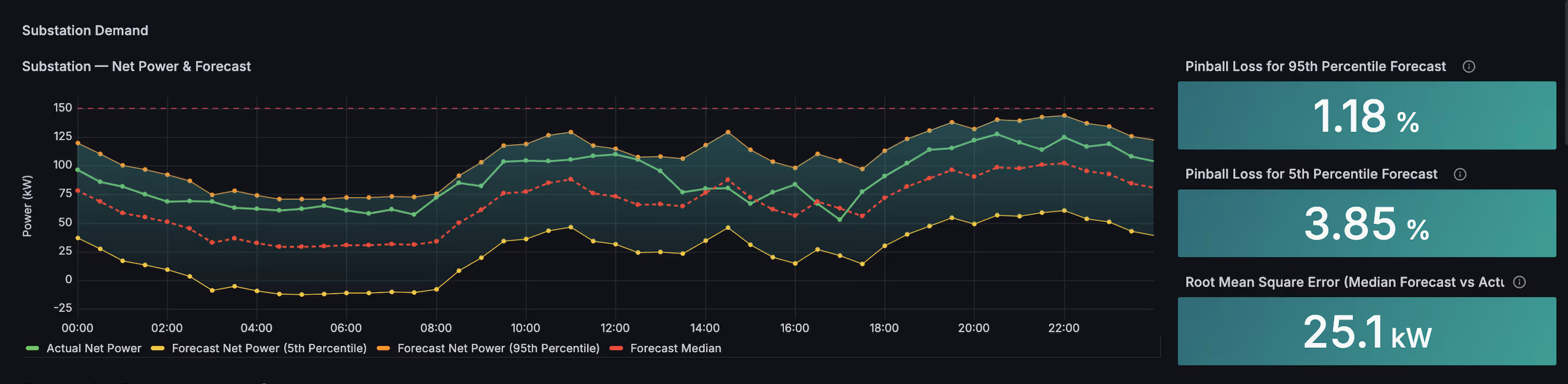
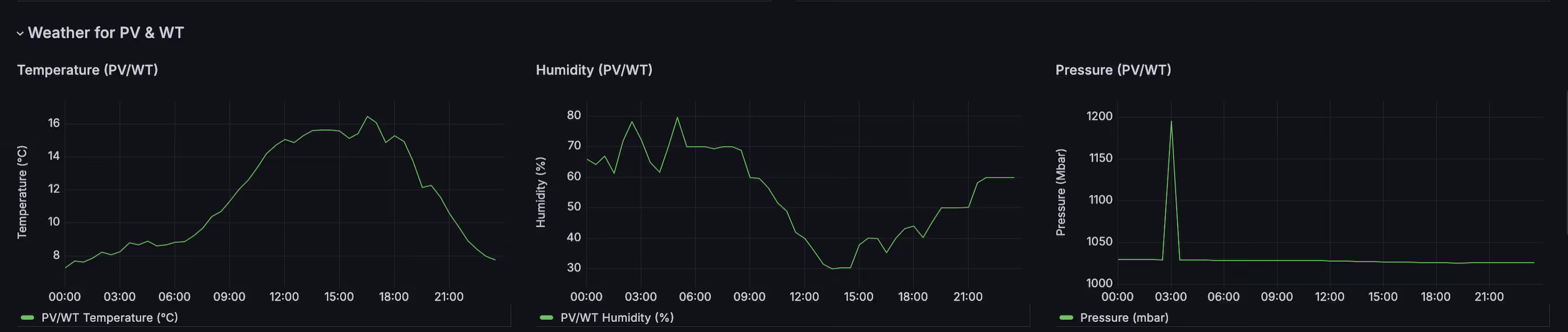
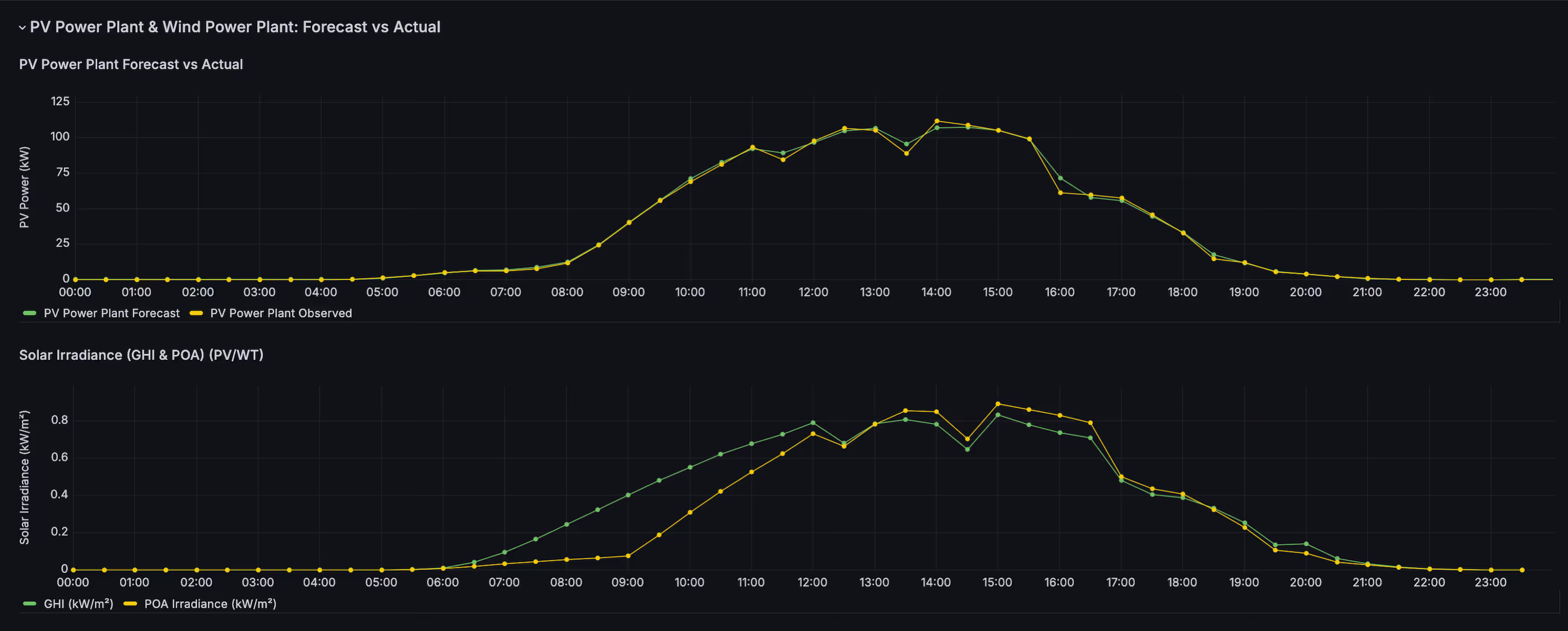
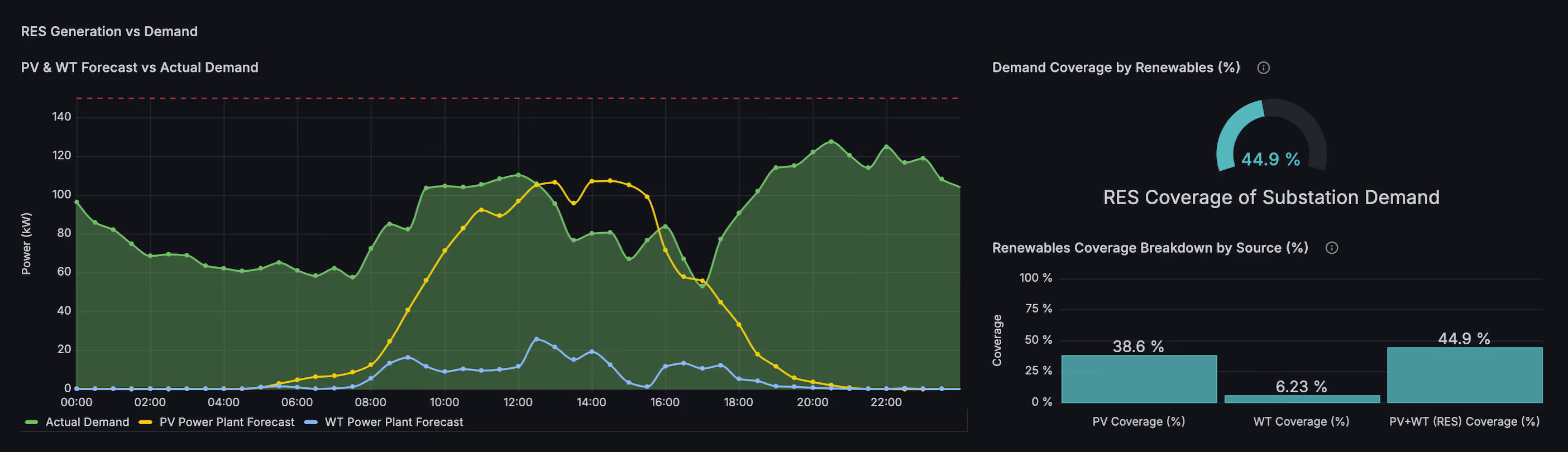
Additionally, Aware supports digital twin simulation, enabling operators to test and validate forecasting strategies in a virtual environment before deployment. This ensures that every flexibility activation or grid control decision is informed, targeted, and cost-effective. The screenshots below give an insight into Aware dashboards and highlight the power of forecasting for modern grid management.
Interested in seeing Omega suite in action?
For modern DSOs, Aware isn't just a visibility tool - it’s a data driven and automation enabler designed to operationalise flexibility and resilience.
Contact SMPnet for a live demonstration and see how integrated forecasting can revolutionise your network operations.
Related

.jpg)
.jpg)
